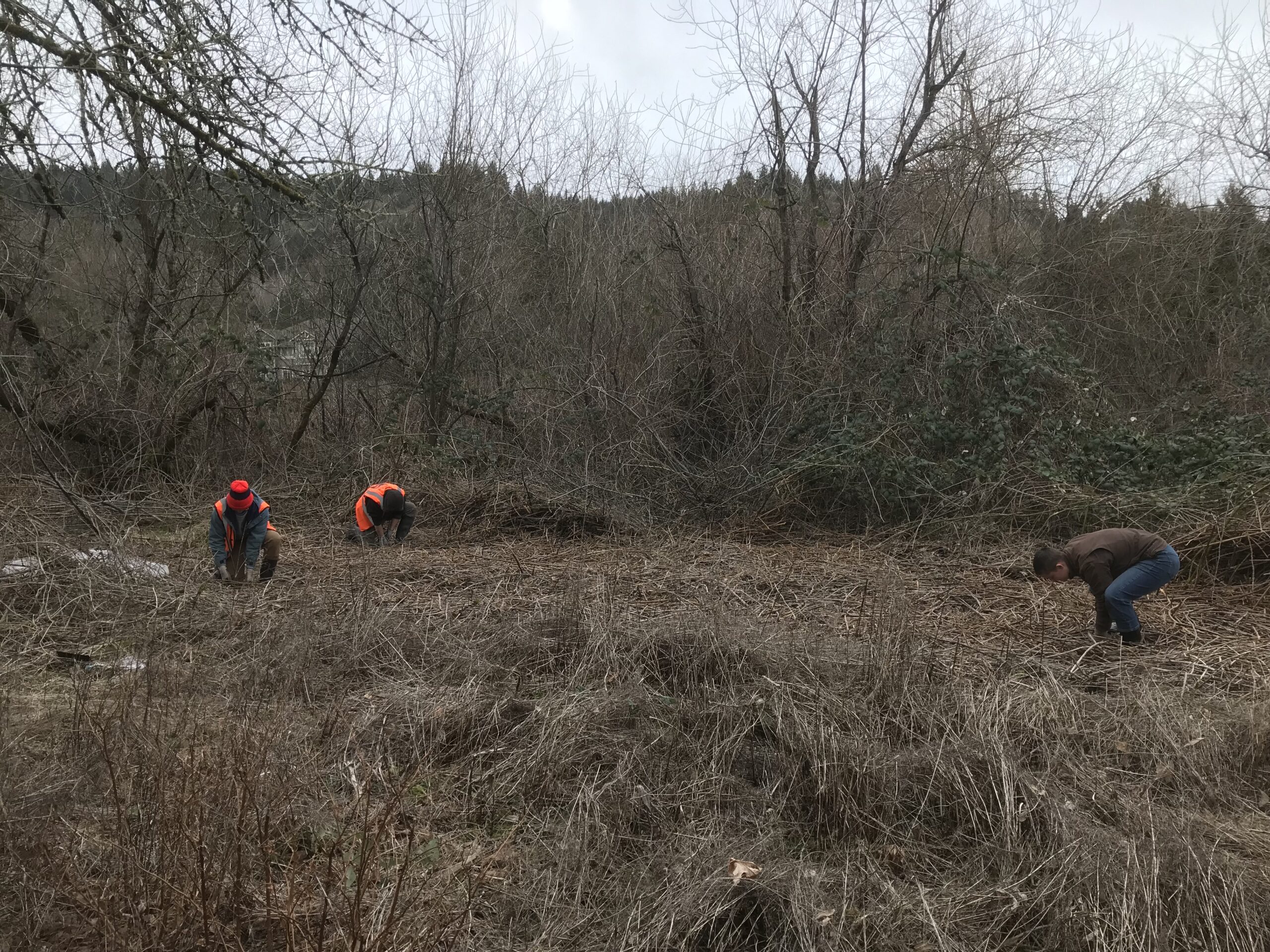
Tibbetts Creek restoration is a long-running effort to turn a flood-prone stream through Issaquah into a healthier, salmon-bearing corridor. It started in 1989, when Rowley Properties hired The Watershed Company to begin shaping a larger vision for what became the Tibbetts Creek Greenway. Nearly four decades later, the work continues, most recently through our partnership with Mountains to Sound Greenway Trust.
No single group did this. Landowners, the City of Issaquah, WSDOT, environmental organizations, and many others have each carried a piece of it. We’re proud to be one of them, and we know the work isn’t finished.
Why did the Tibbetts Creek Greenway start?
It started with a practical problem. Flooding and sediment were affecting businesses, roads, and the surrounding environment along the creek.
Rowley Properties was an early initiator, investor, landowner, and long-term partner in solving it. In 1989 we brought in The Watershed Company to develop a bigger plan, one that treated the health of the creek, the salmon that use it, nearby properties, roads, and the local economy as connected pieces rather than separate problems.
What followed wasn’t one project. Over the years, partners restored creek channels, improved flood capacity, created wetlands and habitat, and replaced infrastructure. Almost every step crossed a property line, which is exactly why it took so many people working together.
Why does a property company care about a creek?
Here’s our view. As a third-generation family-owned company, we’ve learned that stewardship and business strategy aren’t separate conversations. Healthy creeks, sound infrastructure, and a strong local economy tend to rise or fall together.
For our CEO, Kari Magill, it’s also personal.
“Some of my earliest memories are of picnics along Tibbetts Creek with my grandmother and sister. Grandma called it ‘The Babbling Brook’ and we loved watching the water and the sound of it rushing past the stones on the creek bed. Occasionally we were fortunate enough to spot a frog or tadpoles. The Greenway is a very special place. Those experiences taught me early that caring for and enjoying a beautiful place comes with responsibility. Seeing the creek and its habitat restored over the years has been one of the proudest chapters in Rowley’s history and caring for it remains part of our responsibility today and for generations to come.”
Kari Magill, CEO, Rowley Properties
What has Mountains to Sound Greenway Trust done along Tibbetts Creek?
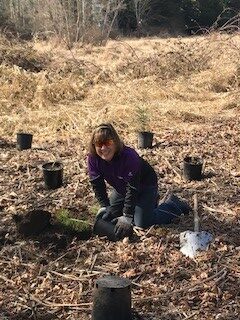
Mountains to Sound Greenway Trust has partnered with Rowley Properties since 2017. Since then, the Greenway Trust has removed blackberry to improve riparian habitat, which is the band of plants and trees that lines a creek’s banks. In its place, they’ve rooted more than 1,000 native plants.
We value this partnership because the Greenway Trust understands something we’ve learned firsthand. Meaningful stewardship takes a long view and partners willing to stay with the work.

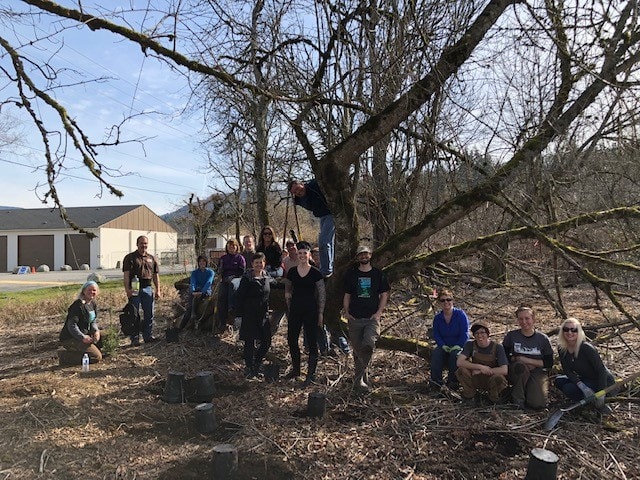
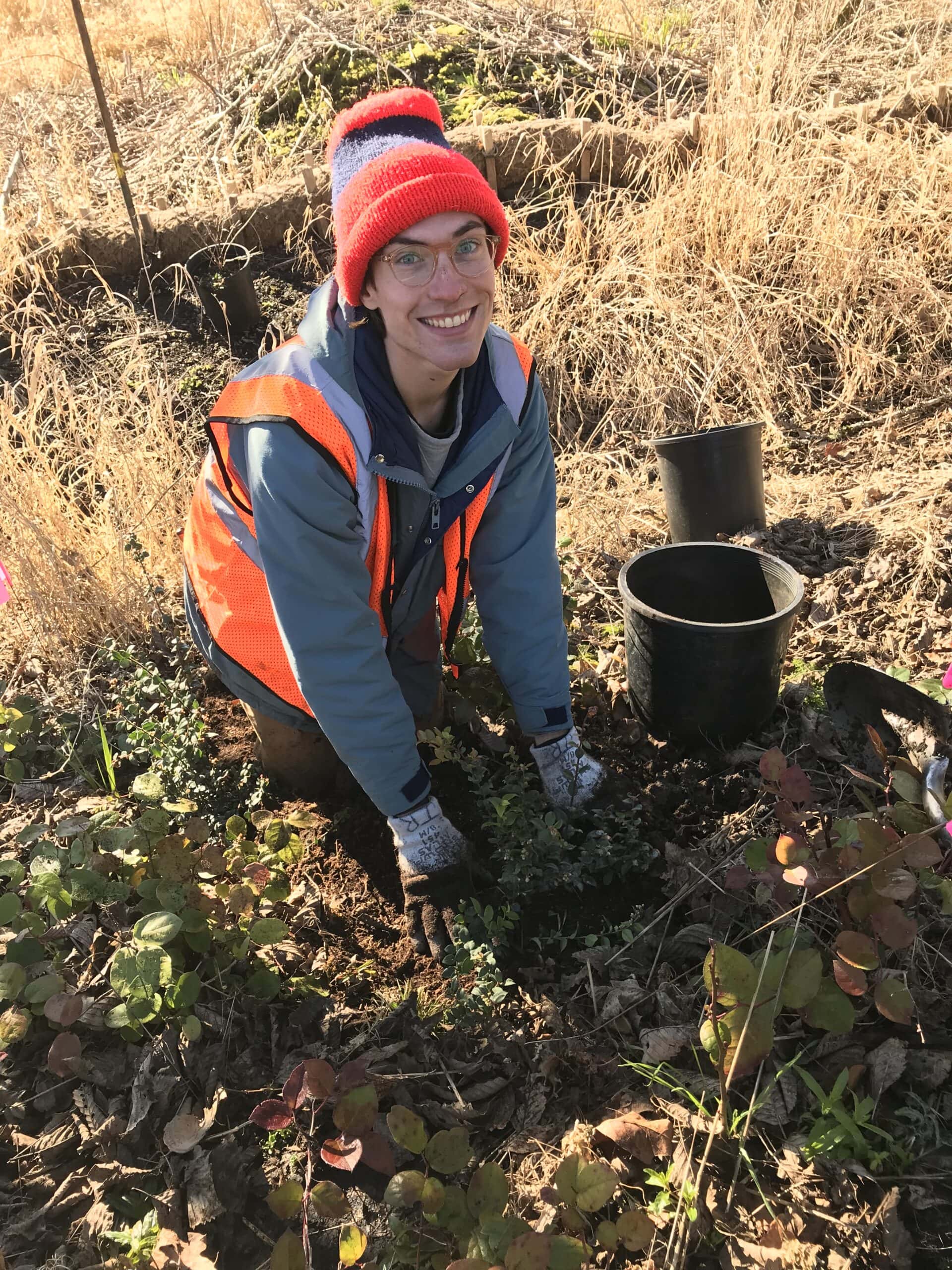
The photos from the last several years tell the story better than we can. In 2019, crews and volunteers cleared dense blackberry and set young native trees and shrubs into the open ground.


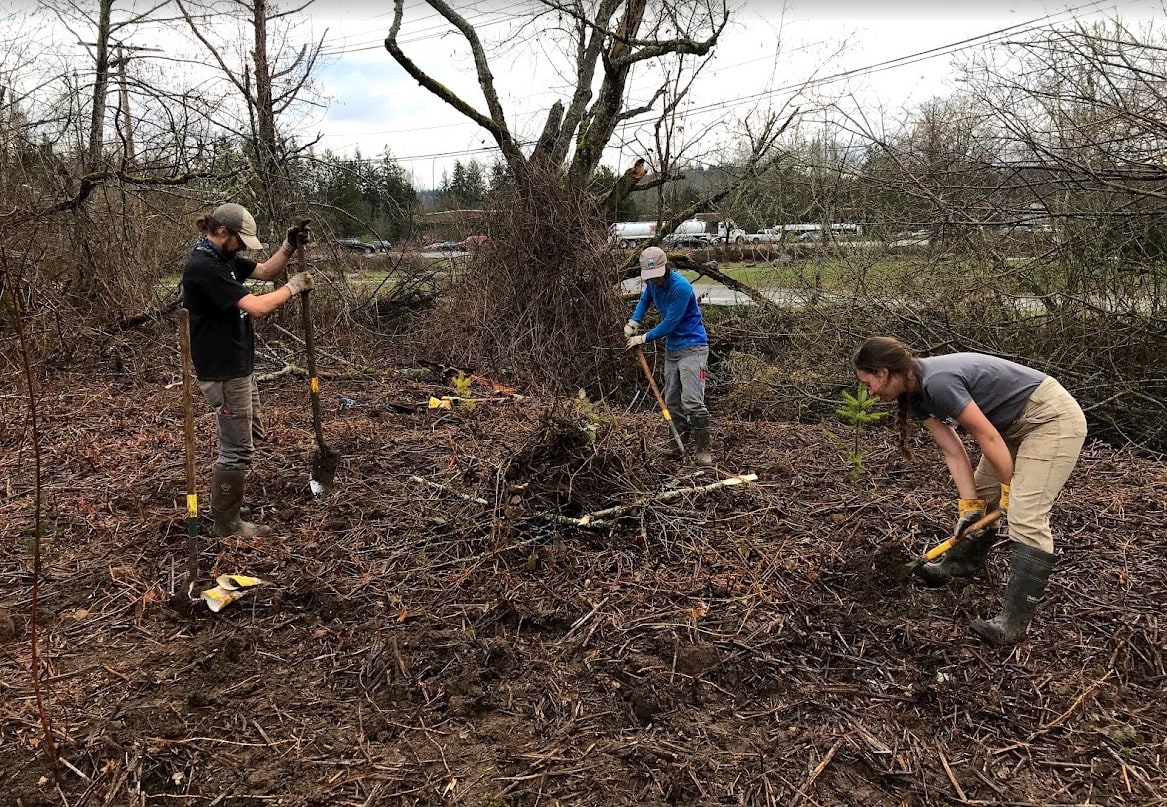
By 2022, planting days included live staking. That means pushing cuttings from native shrubs and trees straight into the soil, where they grow roots of their own.

Why are blackberry and yellow archangel bad for salmon habitat?
Both plants push out the native vegetation a salmon stream depends on.
Himalayan blackberry grows in thick, tangled stands that shade out native plants. Its roots are shallow compared with the deep-rooted shrubs and trees it replaces, so stream banks lose stability and erode more easily. That loose soil can wash into the water as silt, which harms salmon. Blackberry also hugs the bank without giving the creek the cooling shade fish need.
Yellow archangel is a different kind of problem. It’s a groundcover that forms dense mats and can take over an entire forest floor. It was once popular in hanging baskets and garden beds, and it often escapes when yard waste gets dumped in natural areas. King County lists it as a noxious weed and recommends removing it, since it outcompetes native plants and offers wildlife little food or shelter.
What did the 2026 crew days accomplish?
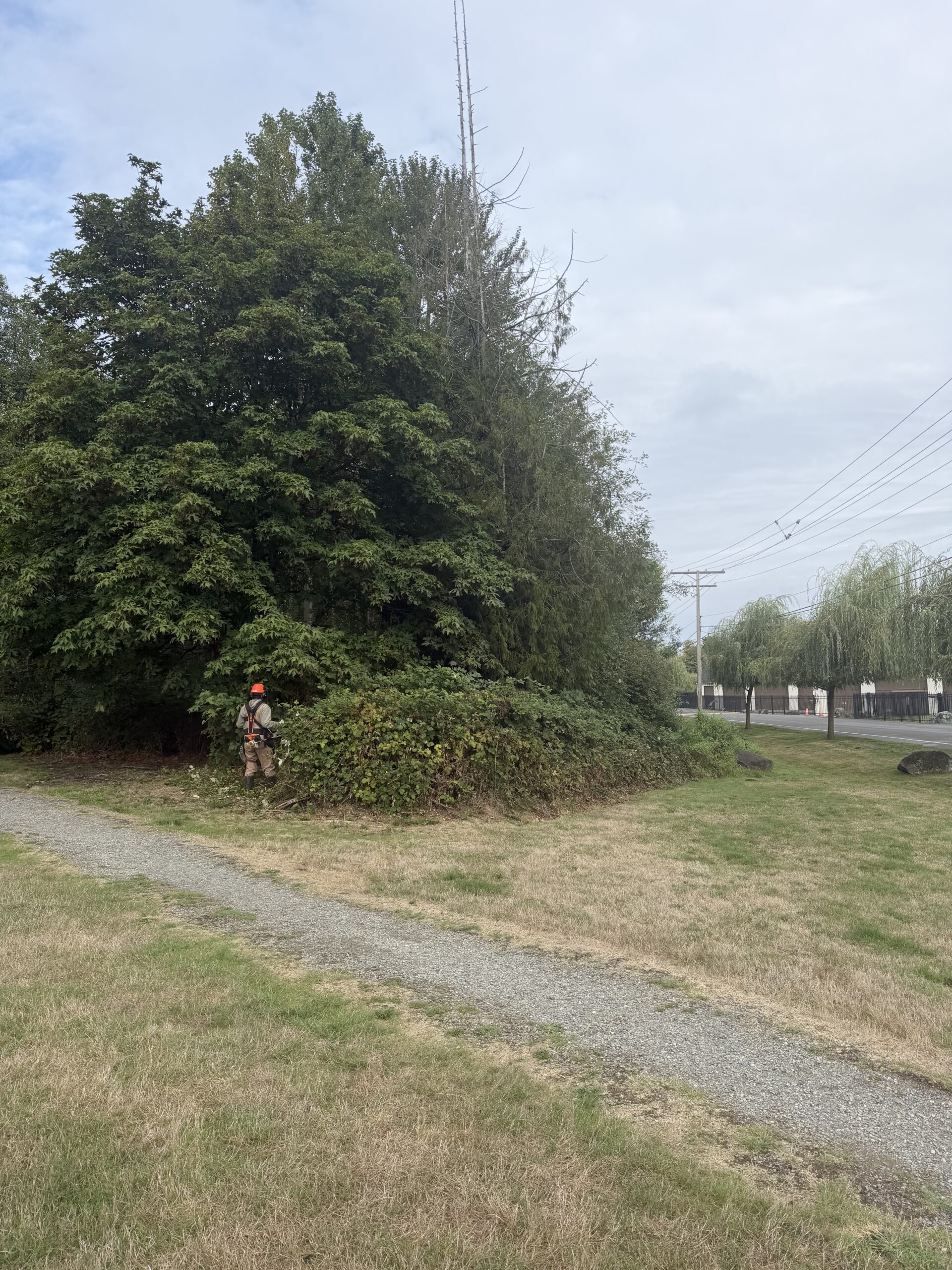
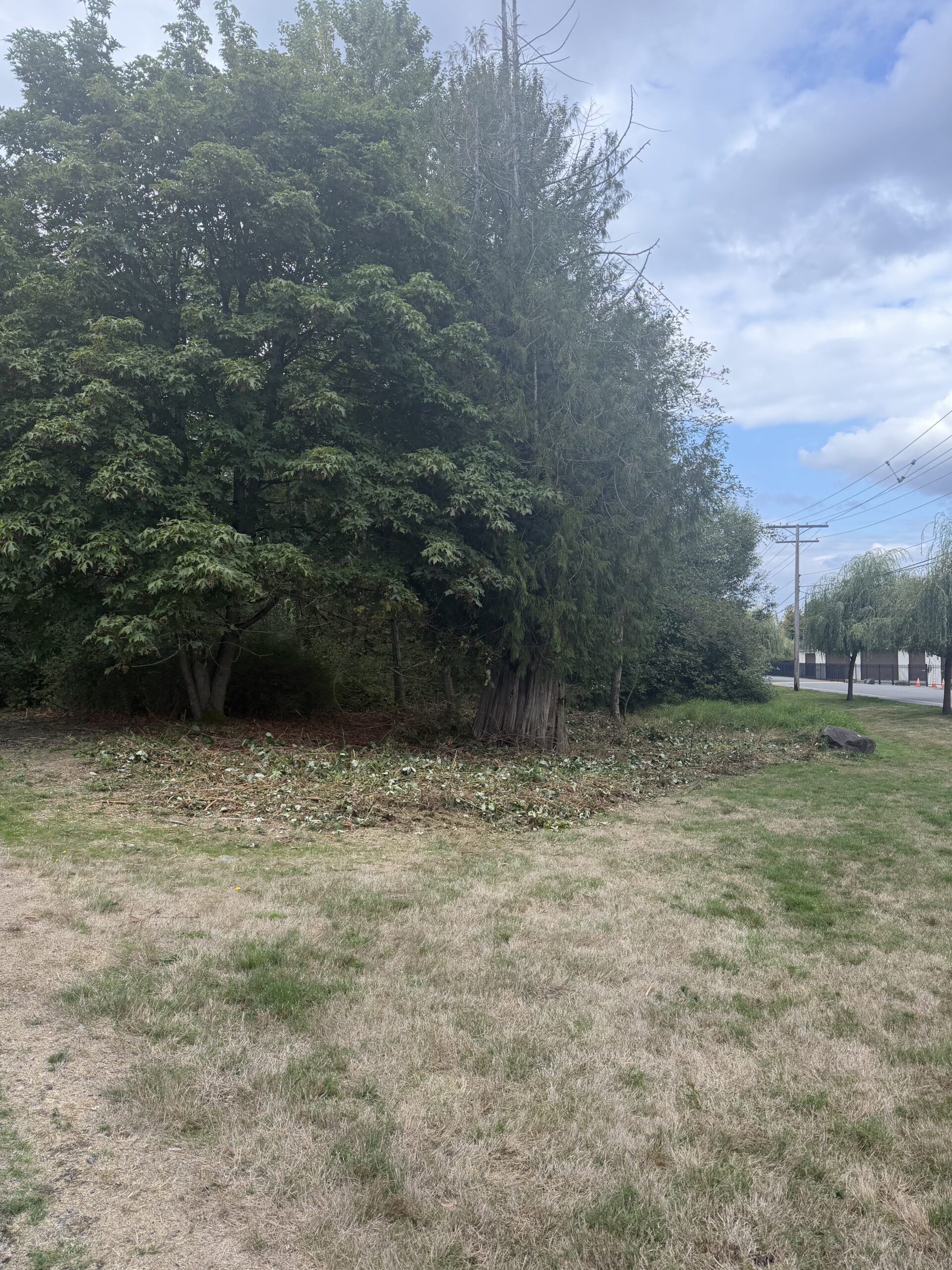
In 2026, Greenway Trust crews spent a couple of crew days along the creek removing and treating Himalayan blackberry and yellow archangel. The goal was to protect the gains from earlier years, since invasive plants come back if no one keeps after them. That work is now complete.
Is the Tibbetts Creek restoration finished?
No, and honestly, it never will be. A creek is a living system. Invasive plants return, young plantings need years to mature, and conditions change from season to season.
What we can say is that we’re getting closer. Each round of removal and planting builds on the last, and that kind of progress only shows up when partners commit for the long haul.
What comes next for Tibbetts Creek?
Rowley Properties will keep showing up for this creek, alongside the partners who’ve carried it this far. If you’d like to see the work up close or lend a hand on a future crew day, Mountains to Sound Greenway Trust is the best place to start.
Frequently asked questions
Where is Tibbetts Creek? Tibbetts Creek runs through Issaquah and empties into the south end of Lake Sammamish. The Tibbetts Creek Greenway is the restored corridor along the creek, shaped over nearly four decades by landowners, the city, the state, and environmental groups.
Which salmon use Tibbetts Creek? Coho salmon have been the focus of reintroduction efforts on Tibbetts Creek, with hatchery coho released into the creek to spawn naturally. King County also lists Tibbetts as a stream with the potential to support Lake Sammamish kokanee, a native salmon the county is working to recover.
Who is working to restore Tibbetts Creek? The effort has involved landowners including Rowley Properties, the City of Issaquah, WSDOT, environmental organizations, and others since 1989. Mountains to Sound Greenway Trust has led invasive removal, restoration and planting work with Rowley Properties since 2017. Trout Unlimited, with funding from the King County Flood Control District, is also studying Tibbetts Creek and the surrounding Greenway to better understand current conditions and identify potential opportunities to improve fish habitat, creek function and long-term flood resilience. This work adds to the broader, decades-long effort to restore and protect the Tibbetts Creek corridor.
How can I help keep Issaquah’s creeks healthy? Never dump yard waste or old hanging baskets in natural areas, since that’s how plants like yellow archangel spread. Pull invasive plants on your own property and replace them with natives. You can also volunteer with the Greenway Trust on restoration days.